

 Parathyroid Surgery

Request an appointment
Contact usDaycase surgery in 95% of cases
In keeping with GIRFT (Get It Right First Time) recommendations the vast majority of parathyroid operations can safely go home on the same day. A few more complex cases may require an overnight stay or if specifically requested by the patient.
Primary Hyperparathyroidism
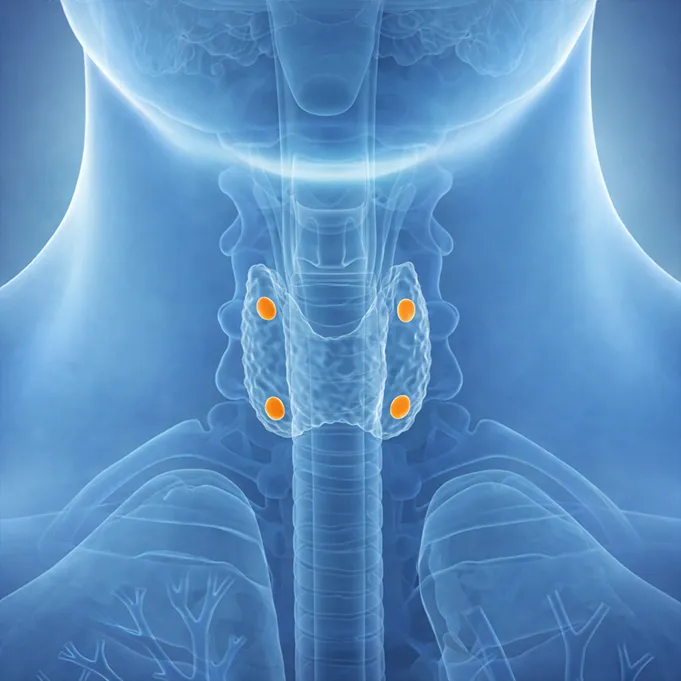
This is where the body produces too much calcium due to a malfunction of the parathyroid glands in the neck. Symptoms are widespread and varied and can cause problems with many organs around the body including bones, kidneys and pancreas. Other symptoms can include excessive urination, thirst, constipation, fatigue and aches around the body. The brain can also be affected with concentration issues and depression.
The only cure of primary hyperparathyroidism is surgery. No medication can cure this and it doesn’t go away by itself.
Surgery aims to remove the diseased gland(s) and allow the levels of calcium and PTH to return to normal.
Minimally invasive parathyroid surgery
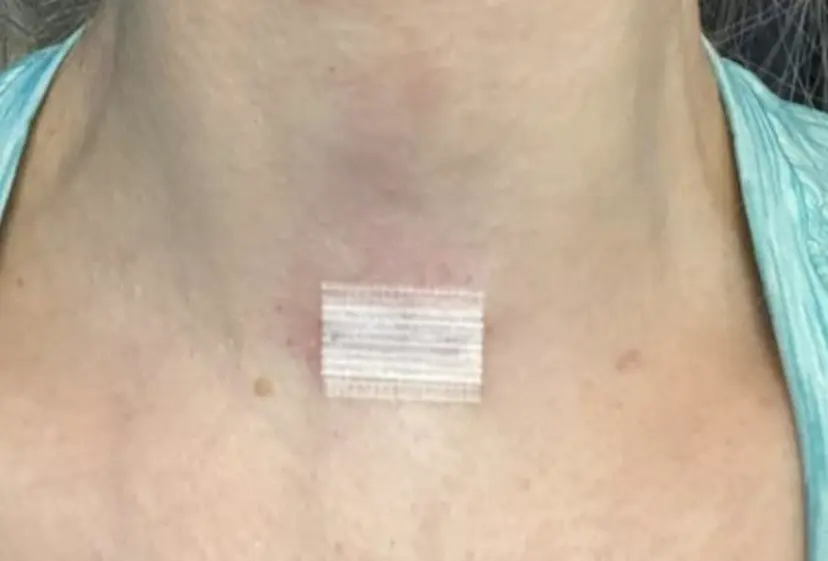
This is where scans have clearly shown which gland is likely to be driving the disease. Here we can offer a MIP (minimally invasive parathyroidectomy). This is offered through a small 2cm scar in the neck to remove the gland. The PTH level is then checked to ensure you are cured before we wake you up.
Local anaesthetic surgery
Surgery can be offered with local anaesthetic. This is offered when a patient is too unwell to undergo a general anaesthetic or would prefer to be awake. The parathyroid tumour needs to be seen on scans and then we can offer this approach to suit individual needs.
Complex redo surgery
If you’ve previously had a failed parathyroid operation or if you’ve had previous thyroid/neck surgery and now require another operation then you need to see a high volume specialist in order to maximise cure chance. Our unit performed in excess of 200 parathyroid operations in 2022 including over 50 redo parathyroid operations.
The team including the pathologist and radiologist are all specialists in their field in getting the diagnosis as well as accurate localisation on scans in order to maximise chance of cure.
Highly specialised equipment such as intra-operative PTH testing helps ensure cure before surgery is completed and nerve monitoring ensures the voice nerves are maintained and protected throughout.
Scan negative disease
Occasionally the blood tests will show you have primary hyperparathyroidism but the scans done by your team will not show which one of the glands is causing the problem. This is known as unlocalised or scan negative disease. In this is situation you will require a 4 gland exploration where all 4 glands are visually checked as well as testing the PTH levels to try and achieve cure.
This operation usually takes about 40-60 minutes and is still performed as a daycase. The scar depends on a few factors but is typically 3-4cm in size. A few examples of scars can be seen here.
Parathyroid gland in chest
Occasionally the scans will show that the parathyroid gland causing the disease has dropped into the chest area near the heart. This is still easily removable. Most can be performed through a scar in the neck. Occasionally a key hole operation (thoracoscopy) needs to be performed to find and remove the lesion.
Normohormonal and Normocalcaemic disease
These are subtypes of primary hyperparathyroidism where either the PTH or calcium can be normal while the other is elevated. There is increasing evidence that these are still associated with disease of the bones and kidneys. Normocalcaemic primary hyperparathyroidism: what is the role of parathyroid surgery? - PMC (nih.gov)
After careful analysis of your bloods and urine results surgery can be offered to cure these.