

 Hernia Surgery

Request an appointment
Contact usLocal anaesthetic repair
most hernias can be repaired with you awake. This removes the need for general anaesthetic and has a faster recovery. Most patients can leave hospital within a couple of hours of surgery with minimal/no pain.
Progrip mesh
We only use Progrip™ mesh in our hernia repairs. This mesh has specially designed hooks on one side to allow it to stick to tissues. It doesn’t need to be stitched into place and therefore reduces any complications associated with extra stitches like chronic pain.
Inguinal hernia
Common hernias especially in men. There is a weakness/split in the groin muscles through which the innards can pass through. This can present as a bulge in the groin which is worst on standing up and sometimes disappears when you lie down. Usually it gives so symptoms and other times it can give a discomfort in the groin/testicle (like a dragging sensation). Very rarely they can get stuck or the bowel can get twisted requiring an emergency operation.
They can be repaired through a small scar in the groin with some stitches and a small piece of Progrip™ mesh to reinforce the area. This is almost always done as a daycase and most patients can go home a couple of hours after surgery.
Umbilical/ Paraumbilical hernia
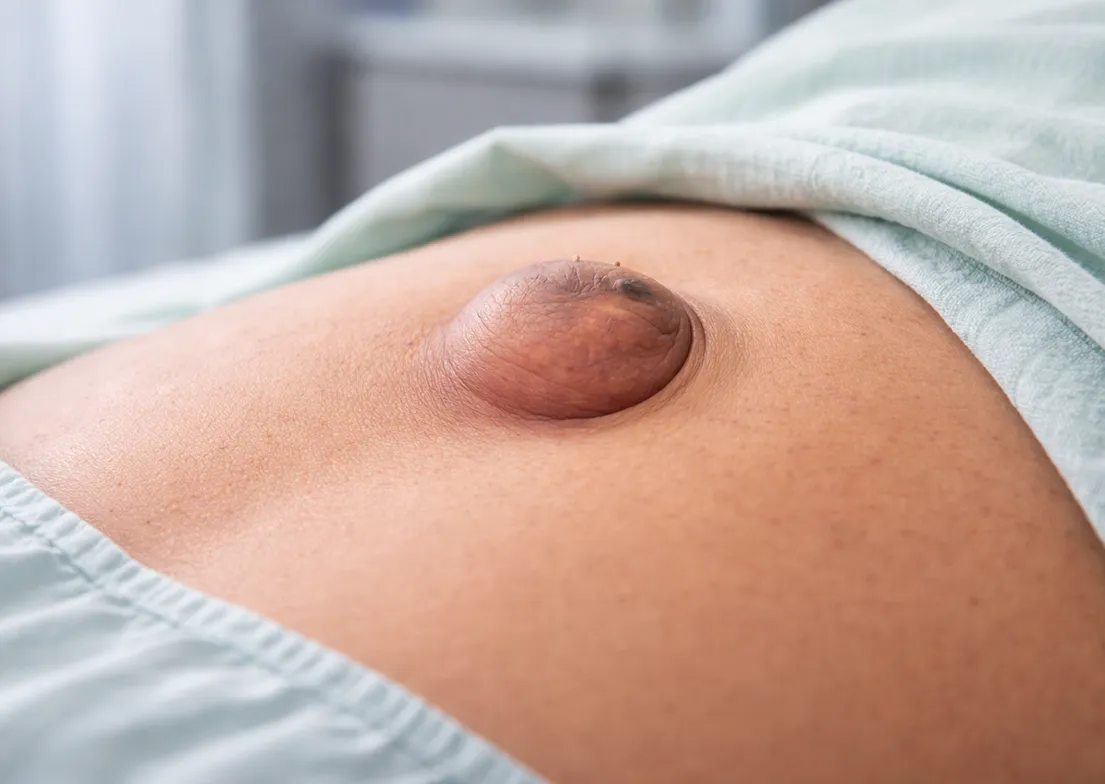
This is caused by a small defect or hole in /next to the bellybutton. Some of the innards can poke through this and give the appearance of a lump. This is usually often and not painful but can be unsightly and can enlarge with time.
Repairing this type of hernia is done through a small scar just under or above the bellybutton. The hole is located and everything coming through it is pushed back in. The hole is then stitched up closed. It is rare to need mesh here and only done where the hole is large or the surrounding tissue is very weak and at risk of tearing with just stitches. This will be discussed with you.
Epigastric hernia
This is caused by a small defect or hole above the bellybutton and usually near the midline. Some of the innards can poke through this and give the appearance of a lump. This is usually often and not painful but can be unsightly and can enlarge with time.
Repairing this type of hernia is done through a small scar over the lump. The hole is located and everything coming through it is pushed back in. The hole is then stitched up closed. It is rare to need mesh here and only done where the hole is large or the surrounding tissue is very weak and at risk of tearing with just stitches. This will be discussed with you.
Incisional hernia
If you’ve had a previous operation and the stitches from the previous one have started to unravel you may notice a bulge coming through from under the scar. This can be from big scars and from keyhole scars. This is known as an incisional hernia.
These can be repaired under general anaesthesia and require opening the old scar and re-stitching the layers underneath which have come underdone. A mesh might be inserted depending on the size of the hernia.
Femoral hernia
These are commoner in women than men and usually present as a lump low in the groin that doesn’t disappear when lying down. They are usually more tender to touch and have a higher change of getting strangulated. Repair is usually recommended for these.
Repairing this type of hernia is done through a small scar over the lump. The hole is located and everything coming through it is pushed back in. A small pug of mesh may be inserted to help block the hole and it is then stitched up closed.